ઇર્ડ્રવિકાસજૈન.કેપીજેસ્પેસ.કોમ

ડૉ. વિકાસ જૈન

ઇન્ટરવેન્શનલ રેડિયોલોજી | અતિ ઓછા ચીરફાડવાળું, છબી-માર્ગદર્શિત પ્રક્રિયાઓ

Advanced Arteriovenous Malformation (AVM) Diagnosis & Treatment
— Safe, Precise & Minimally Invasive Neurointerventional Care

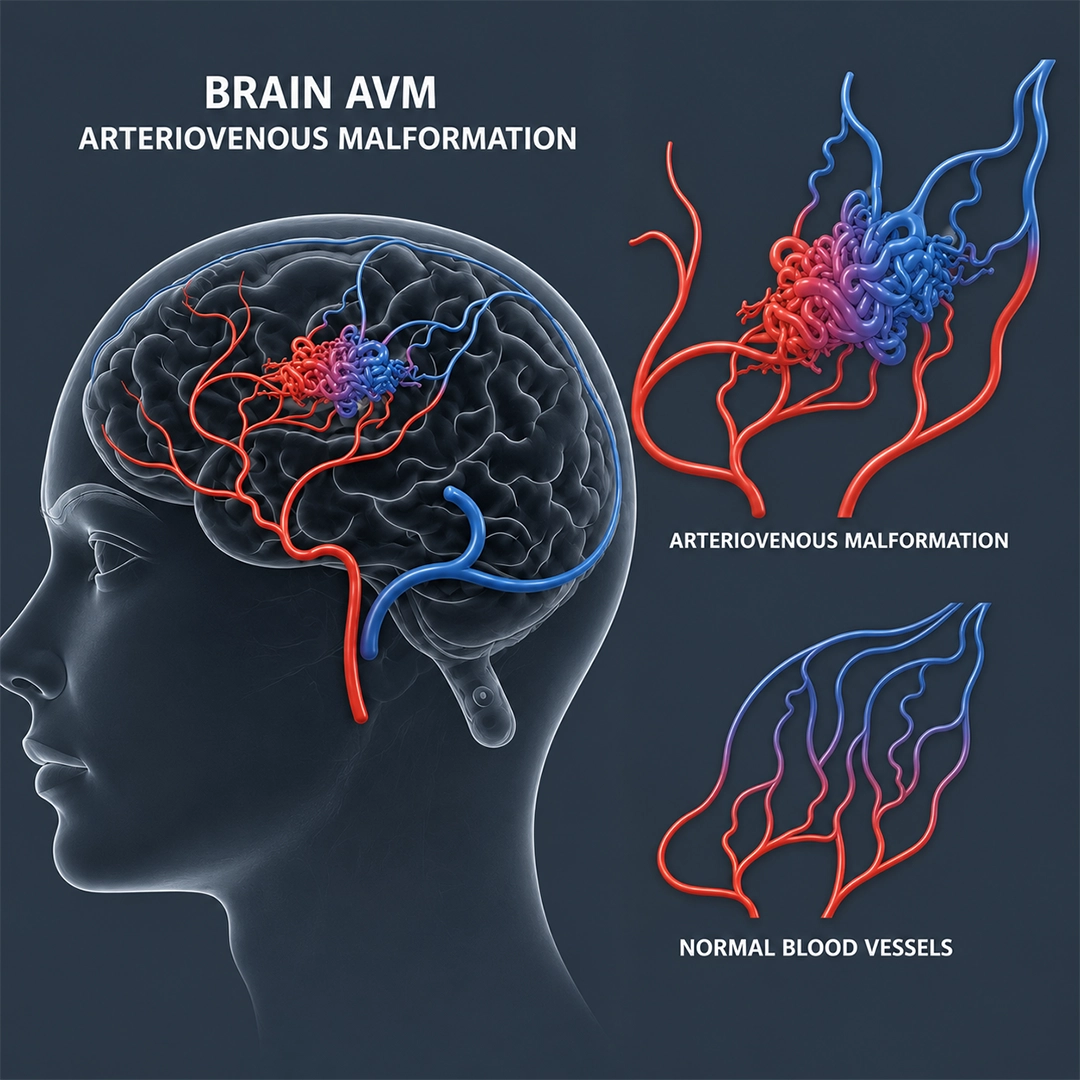
Brain AVM

Brain Arteriovenous Malformation (AVM) – Symptoms, Causes, Diagnosis & Treatment

A Brain Arteriovenous Malformation (AVM) is an abnormal connection between arteries and veins that disrupts normal blood flow and increases the risk of brain hemorrhage, seizures, and neurological complications. Early diagnosis and advanced treatment, can help reduce the risk of bleeding and protect brain function.

What is an Arteriovenous Malformation (AVM)?

An Arteriovenous Malformation (AVM) is an abnormal tangle of blood vessels where arteries connect directly to veins without the normal network of tiny blood vessels (capillaries) in between. This disrupts normal blood circulation and can place excessive pressure on the blood vessels.

Although AVMs can occur anywhere in the body, Brain AVMs are the most serious because they can lead to brain hemorrhage, seizures, stroke-like symptoms, and other neurological complications.

Many people may have an AVM for years without knowing it, while others develop symptoms that require immediate medical attention.

What Are the Symptoms of an AVM?

The symptoms of a brain AVM vary depending on its size and location. In approximately half of the patients, an AVM is discovered only after it causes bleeding in the brain.

Common AVM symptoms include:

Severe or

recurring headaches

Seizures (fits)

Sudden weakness or numbness in the face, arm, or leg

Difficulty speaking or understanding speech

Vision disturbances

Dizziness or balance problems

Memory or concentration difficulties

Brain hemorrhage (bleeding)

If you experience any sudden neurological symptoms, immediate medical evaluation is essential.

What Is the Risk of Bleeding from an AVM?

Important facts about AVM bleeding risk:

How Is an AVM Diagnosed?

In some cases, especially after a recent brain hemorrhage, the AVM may not be clearly visible on MRI or CT scans. DSA helps establish a definitive diagnosis.

AVM Treatment Options

Treatment is individualized based on the size, location, symptoms, and bleeding history of the AVM. The primary goal is to prevent future hemorrhage and protect brain function.

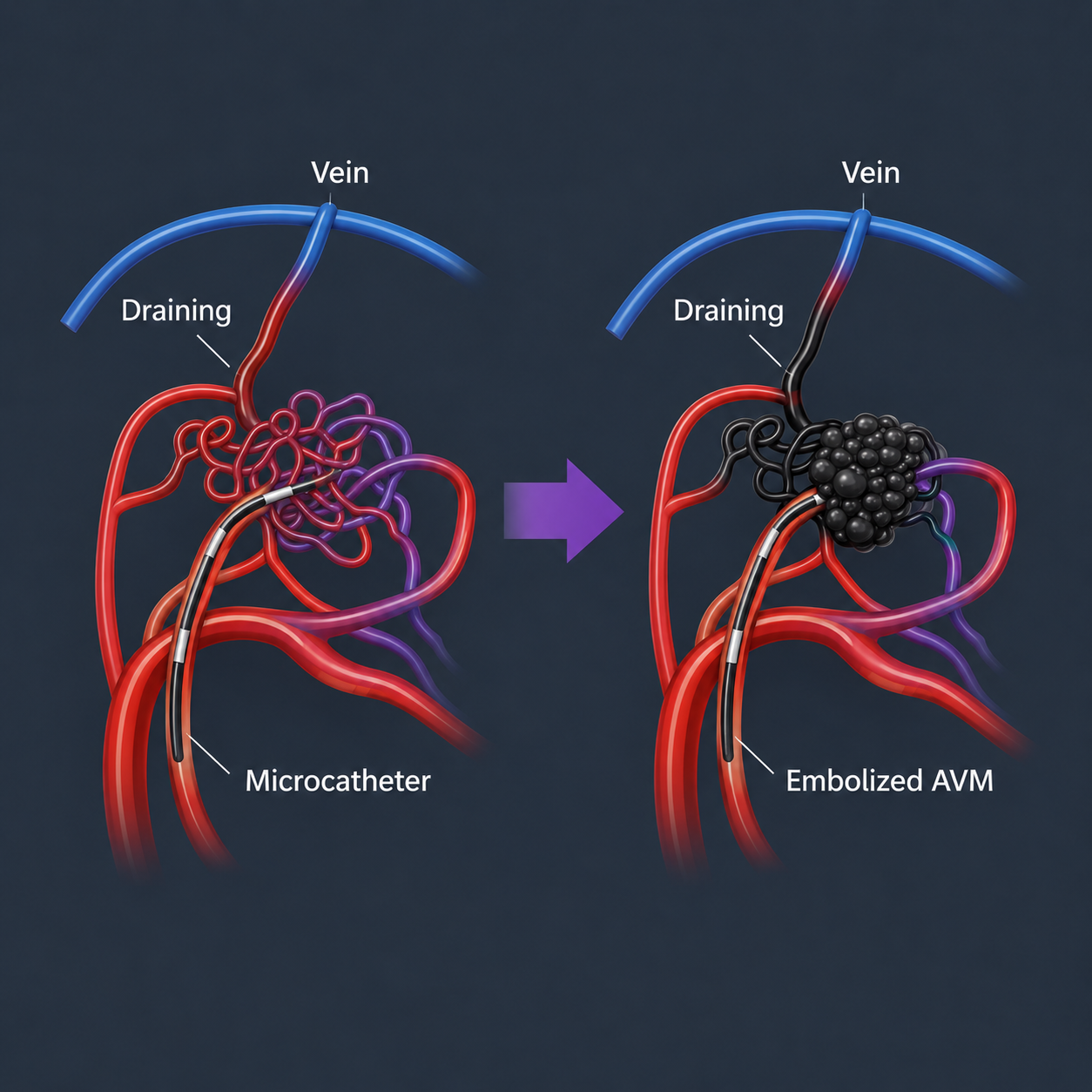
1. Endovascular Embolization

AVM EMBOLIZATION

Endovascular Embolization is a minimally invasive procedure performed through a catheter inserted into an artery in the groin.

The catheter is guided to the blood vessels supplying the AVM, and a special embolic material such as Onyx® or medical glue is injected to block blood flow within the abnormal vessels.

Benefits of Embolization

AVM EMBOLIZATION

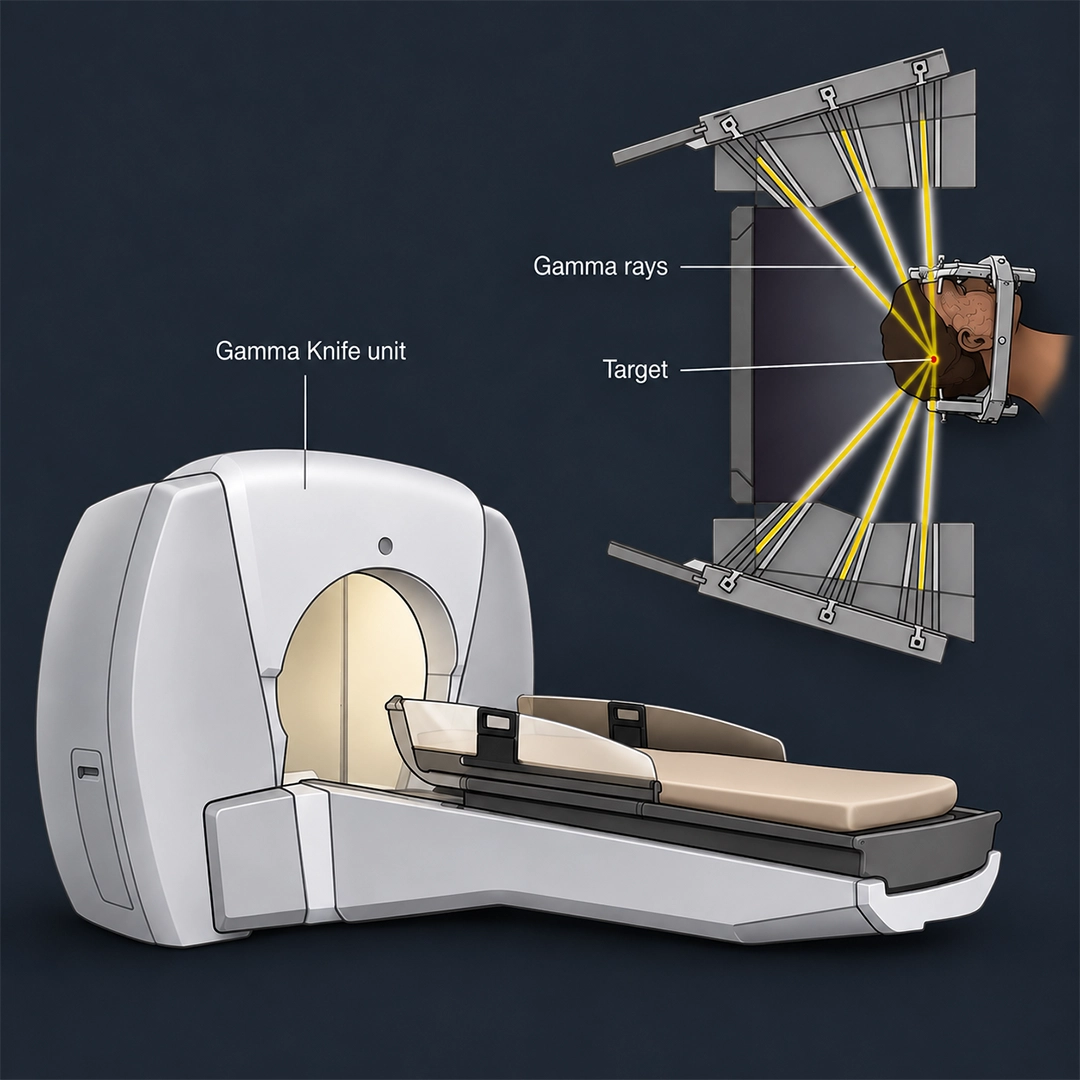
2. Stereotactic Radiotherapy

Stereotactic Radiotherapy is a non-invasive treatment that uses highly focused radiation beams to target the AVM.

The radiation gradually causes the abnormal blood vessels to close over time, usually within 3 years in upto 80% of patients.

When Is Radiotherapy Recommended?

It is important to note that the risk of bleeding remains until the AVM is completely closed.

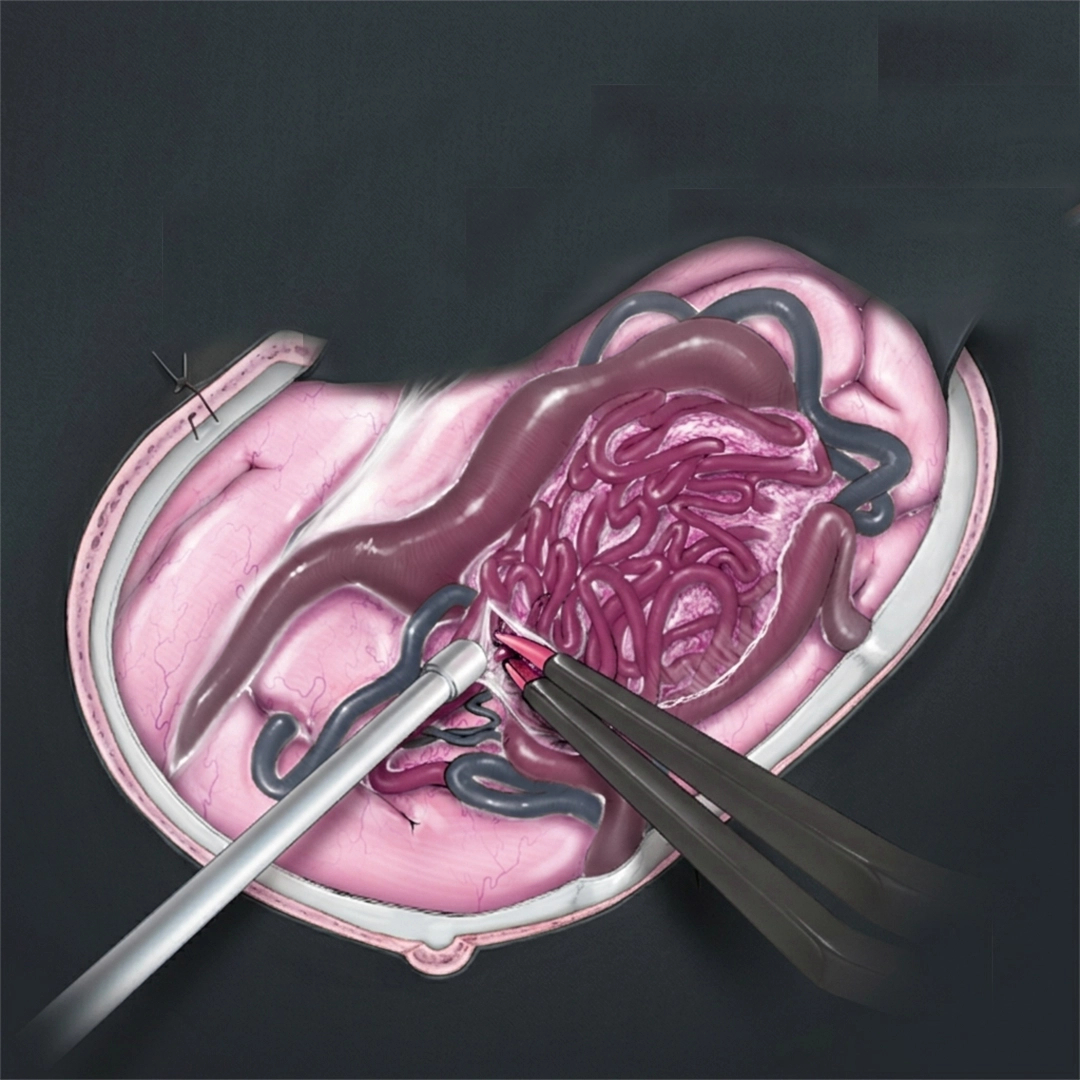
3. Microsurgical Excision

Microsurgical Excision For AVM

Microsurgical excision is a surgical procedure in which the AVM is removed completely using advanced microsurgical techniques.

This treatment can provide an immediate cure when the entire AVM is successfully removed.

Surgery Is Commonly Recommended When:

Deeply located AVMs or those involving important brain functions may not be suitable for surgery due to higher risks.

Microsurgical Excision For AVM

4. Conservative (Medical) Management

Not every AVM requires immediate intervention.

In selected patients with unruptured AVMs or AVMs that cannot be treated safely, careful observation and regular follow-up may be recommended.

This approach includes:

Although treatment risks are avoided, the AVM remains present and continues to carry a risk of bleeding.

Which AVM Treatment Is Best?

There is no single treatment suitable for every AVM. The best treatment depends on:

Common AVM symptoms include:

AVM size & location

Patient age

Bleeding history

Neurological symptoms

Available expertise

Overall health condition

Frequently Asked Questions (FAQs)

No. An AVM is not a tumor. It is an abnormal connection between arteries and veins.

Yes. An AVM can cause bleeding in the brain, which may result in a hemorrhagic stroke.

Recovery depends on the treatment method used and the complexity of the AVM. Many minimally invasive procedures allow faster recovery than traditional surgery.

ટોચ પર સ્ક્રોલ કરો