ઇર્ડ્રવિકાસજૈન.કેપીજેસ્પેસ.કોમ

Advanced Brain Aneurysm Diagnosis & Treatment
— Safe, Precise & Minimally Invasive Neurointerventional Care

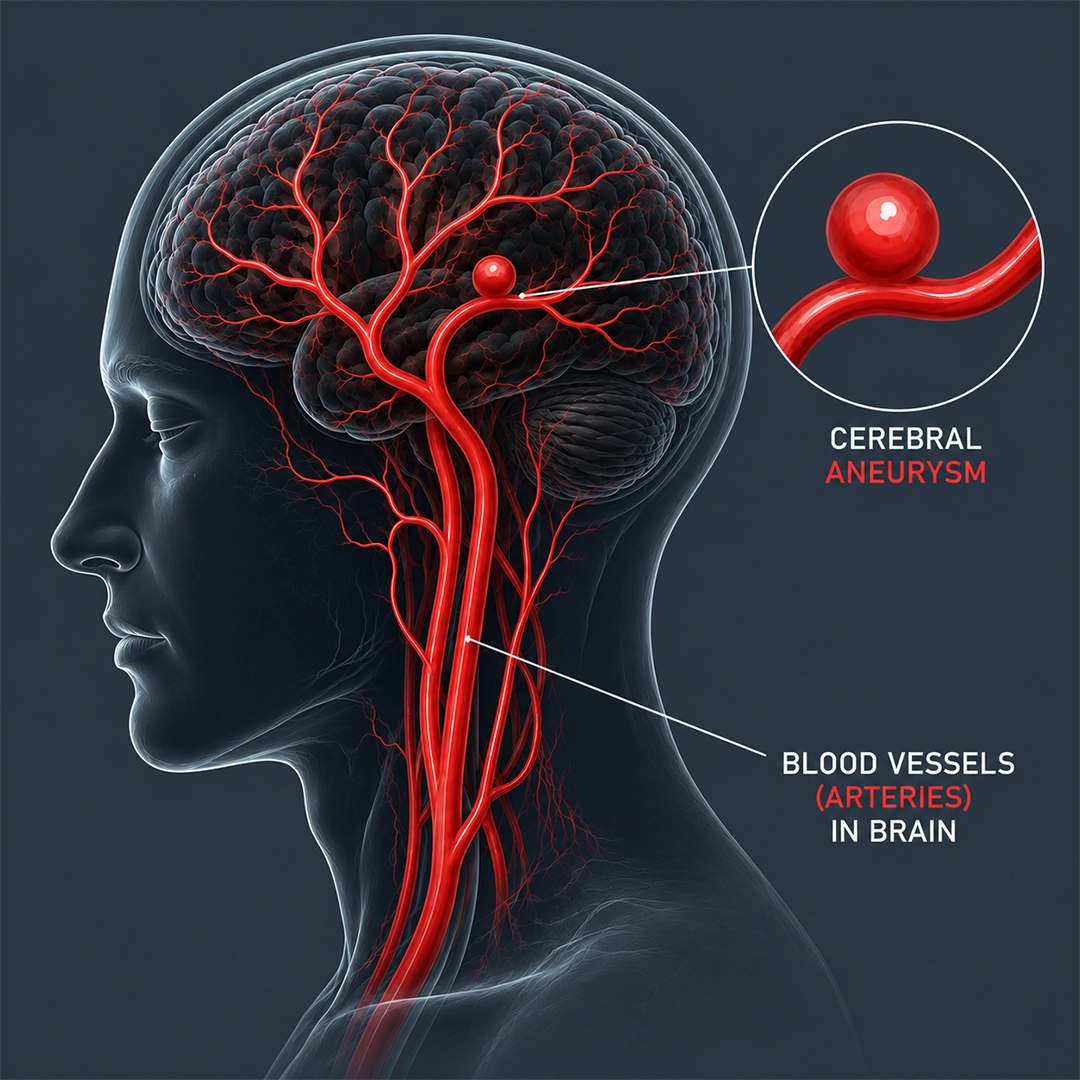
Cerebral Aneurysm

Brain Aneurysm ( Cerebral Aneurysm ) – Symptoms, Causes, Diagnosis & Treatment

A Brain Aneurysm (Cerebral Aneurysm) is a weakened area in a brain blood vessel that bulges like a balloon and may rupture, causing life-threatening brain bleeding (subarachnoid haemorrhage). Early diagnosis using advanced imaging and timely treatment with endovascular coiling, flow diverter stents, or surgical clipping can help prevent serious complications and improve patient outcomes.

What is a Brain Aneurysm?

A Brain Aneurysm is a weak or thin area in a blood vessel of the brain that bulges outward like a balloon. Due to continuous blood flow and pressure, this bulge may gradually increase in size. In some cases, an aneurysm can rupture (burst), leads to subarachnoid haemorrhage (SAH), a type of brain haemorrhage, causing bleeding in the brain.

Many brain aneurysms remain small and may not cause symptoms. However, larger aneurysms or ruptured aneurysms can lead to severe neurological complications and require immediate medical attention.

Why Does a Brain Aneurysm Occur?

A brain aneurysm develops when the wall of a blood vessel becomes weak. Several factors can increase the risk:

Symptoms of a Brain Aneurysm ( Unruptured )

Small aneurysms may not cause any symptoms. Larger aneurysms can press on nearby nerves and brain structures, leading to:

Symptoms of a Brain Aneurysm ( Ruptured )

A ruptured aneurysm is a medical emergency and may cause:

Outcome of SAH or Aneurysm ruptured:

How is a Brain Aneurysm Diagnosed?

Brain Aneurysm Treatment Options

Treatment depends on the aneurysm’s size, location, symptoms, and risk of rupture.

How is Endovascular Coiling Performed?
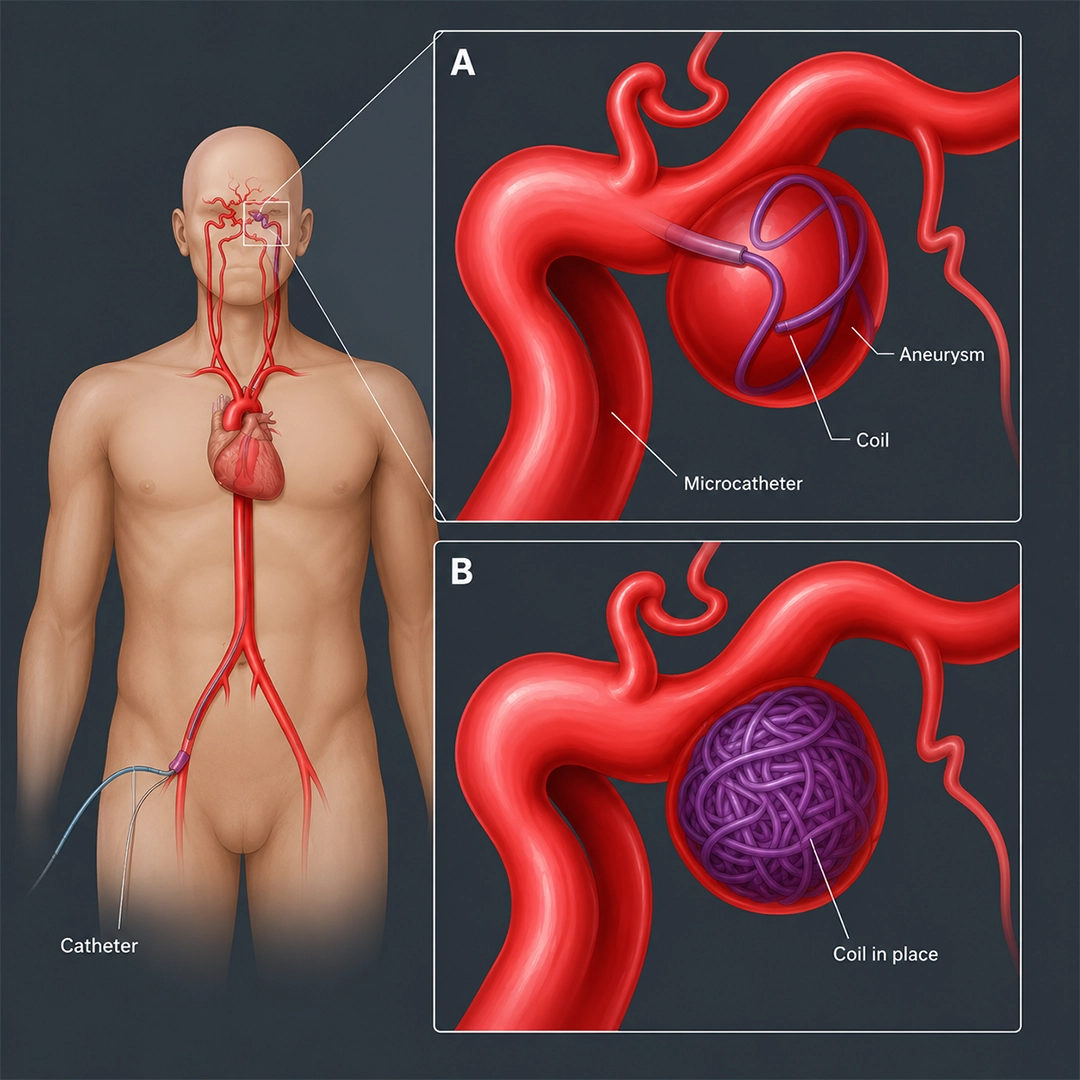
Endovascular coiling is a minimally invasive procedure used to treat brain aneurysms without open brain surgery. The procedure is typically performed in a specialized neurointerventional suite under advanced imaging guidance.

Aneurysm Coiling

Step 1: Patient Preparation

The patient is given general anaesthesia to ensure comfort during the procedure. The treatment area is cleaned and prepared in a sterile manner.

Step 2: Catheter Insertion

A small puncture is made in an artery, usually in the groin. A thin, flexible tube called a catheter is carefully inserted into the blood vessel.

Step 3: Navigation of Microcatheter to the Aneurysm

Using real-time cerebral angiography guidance, the catheter is gently advanced through the blood vessels to reach the brain aneurysm.

Step 4: Coil Deployment

Tiny soft platinum coils are gradually placed inside the aneurysm through the microcatheter. These coils reduce blood flow into the aneurysm and promote clot formation within it.

Step 5: Additional Support Devices (If Required)

In certain cases, a balloon or stent may be used to help keep the coils securely in place and improve treatment stability.

Step 6: Final Angiographic Assessment

A final cerebral angiogram is performed to confirm successful treatment and ensure that blood flow through the normal arteries remains intact.

Step 7: Catheter Removal and Recovery

The catheter is removed, and the puncture site is closed. The patient is then monitored closely during the recovery period before discharge.

How is Flow Diverter Treatment Performed?
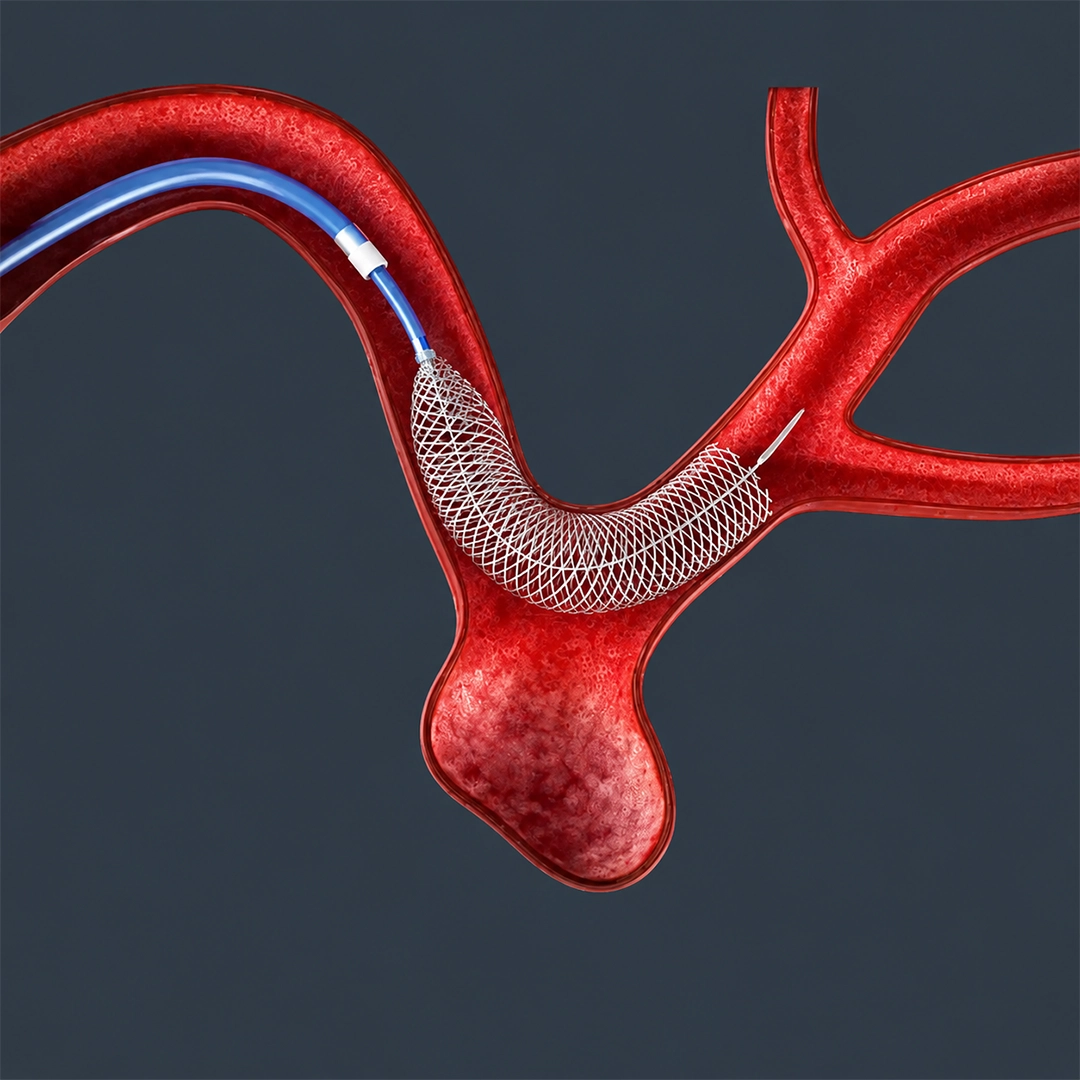
Flow diverter is a special type of flexible stent used to treat selected brain aneurysms. The device is place within the artery across the aneurysm neck creating a pathway that diverts blood flow away from the aneurysm. Immediately after deployment, blood flow into the aneurysm decreases significantly while normal blood flow through the artery is maintained. Over the following 6 weeks to 6 months, the aneurysm gradually closes and heals as the blood vessel reconstructs itself.
Flow Diverter

When is Flow divertor preferred?

Surgical Clipping for Brain Aneurysm

What is Surgical Clipping?
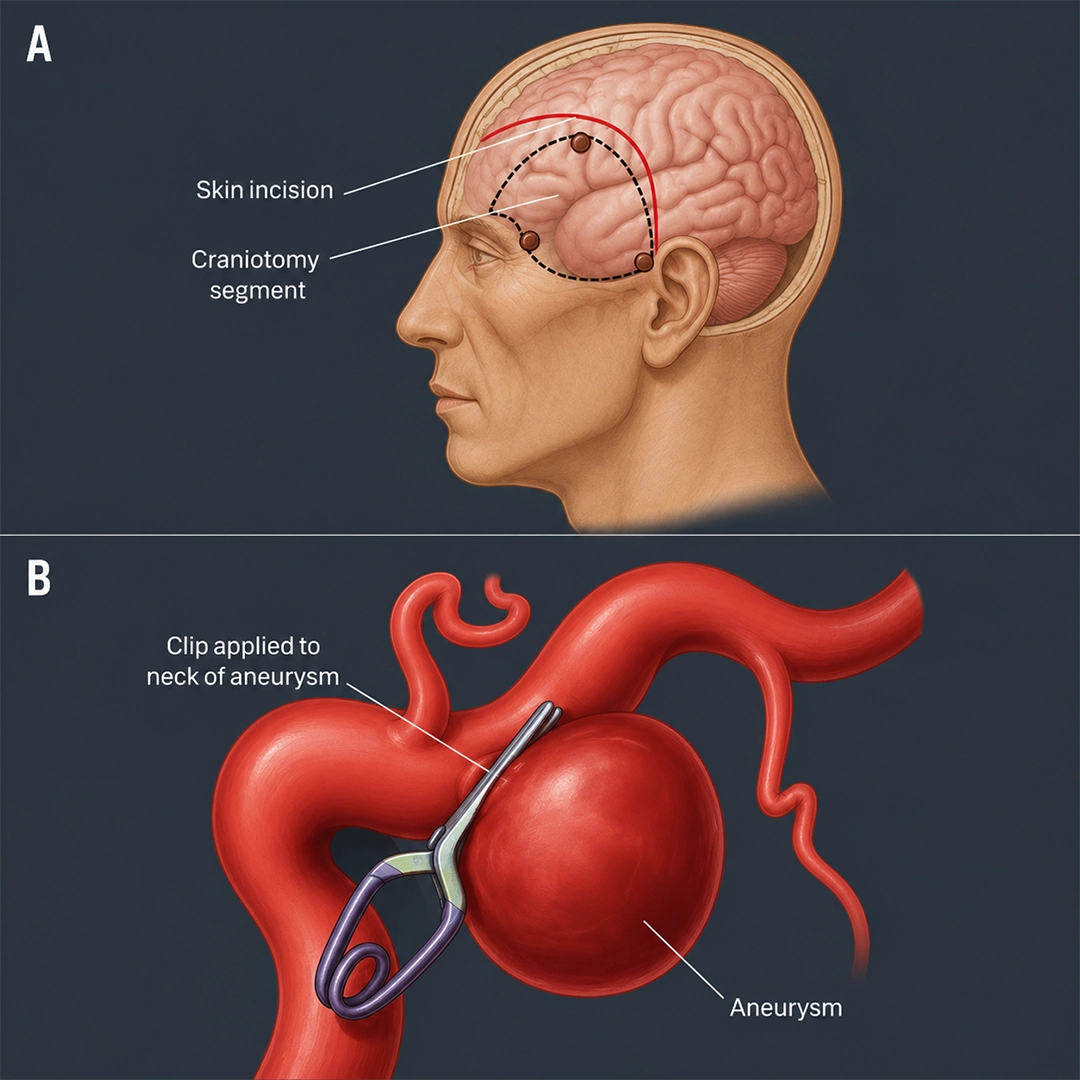
Surgical clipping is a traditional treatment option for brain aneurysms. This procedure is performed by a neurosurgeon through open brain surgery.

During the procedure, a portion of the skull is temporarily opened (craniotomy) to access the brain and locate the aneurysm. Once the aneurysm is identified, a small specially designed metallic clip is placed across its neck. This clip blocks blood flow into the aneurysm, preventing it from enlarging or rupturing while preserving normal blood flow through the surrounding arteries.

Surgical Clipping

Advantages of Endovascular Coiling Over Surgical Clipping

Endovascular coiling has become one of the most widely preferred treatment options for brain aneurysms due to its minimally invasive nature and excellent clinical outcomes. Compared with traditional surgical clipping, coiling offers several important advantages for patients.

Key Benefits of Endovascular Coiling

Why is Endovascular Coiling Commonly Preferred?

Due to its proven effectiveness, minimally invasive approach, and favourable patient outcomes, endovascular coiling has become a standard treatment option for most brain aneurysms. It offers a safer option to traditional surgical clipping while avoiding the need for open brain surgery.

In developed countries approximately 80% of aneurysm are treated by endovascular methods (Coiling & Flow diversion).

Watch: Brain Aneurysm Explained

Need More Information or Want to Book an Appointment?

ટોચ પર સ્ક્રોલ કરો